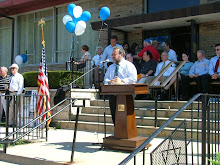
Fire blackened the entrance of the Masorti Yedid Nefesh synagogue in=
Modi'in.
>
>The fire blackened the entrance mat and melted two plastic plants.
>
>Members of the community, which numbers about 40=20
>families, said that the incident comes just two=20
>weeks after a sign was placed on the fa=E7ade of=20
>the synagogue identifying it with the Masorti movement.
>
>But police said that fire was set by bored=20
>teenagers and that there was no suspicion that=20
>the attack was religiously motivated.
>
>The building, the community's first permanent=20
>house of prayer, was built over a year ago with=20
>help from the Housing and Construction Ministry and the Modi'in=
Municipality.
>
>"The damage was minimal but the shock is great,"=20
>said Naomi Dar, chairperson of Yedid Nefesh."The=20
>attack was definitely aimed against us," added=20
>Dar who admitted that except for a few isolated=20
>incidents, Masorti Jews always felt welcome and comfortable in Modi'in.
>
>But Supt. Yoram Barina, commander of the Modi'in=20
>police station, said that the arson incident was=20
>the work of "bored youths on summer vacation"=20
>and rejected the possibility that the fire was=20
>started by individuals ideological opposed to the Masorti movement.
>
>"This was just a prank by a bunch of kids who=20
>played around with fire," said Barina.
>
>Modi'in Reut Spokesman Elad Shimonovich said=20
>that an investigation by the Modi'in security=20
>department and Modi'in Police revealed that the=20
>incident was an act of vandalism by teenagers,=20
>and not an attempt to firebomb a synagogue=20
>motivated by ideology or religious conviction.
>
>"This is a prefab building that from the outside=20
>does not look like a synagogue and therefore the=20
>youths were not conscious of their actions," said Shimonovich.
>
>Chief Rabbi of Modi'in David Lau, who is=20
>Orthodox, said in response to the incident that=20
>"burning synagogues was never the way of the Torah."
>
>Dar said that about three years ago a group of=20
>haredi youths disrupted prayers and scared=20
>children of the community during Pessah=20
>services. Police detained some of the youths,=20
>who were ordered to apologize to the community.
>
>Dar said that in another incident, a former=20
>municipality representative from Shas publicly=20
>denounced the Masorti movement during a=20
>discussion on land allocation for the Yedid Nefesh synagogue.
>
>"But in general, the municipality and citizens=20
>here are very accepting of us. We never receive=20
>bad feelings from anyone," he said.
>Attorney Yizhar Hess, executive director and CEO=20
>of the Masorti Movement in Israel, said in=20
>response, "We are surprised and shocked by the=20
>attempt to damage the synagogue because Modi'in=20
>and the municipality is pluralistic, open and=20
>accepting and open to all three streams of Judaism.
>
>"It is difficult to tell whether this was a=20
>religiously motivated attack or pointless=20
>vandalism but we hope that this is a one-time=20
>incident that will not repeat itself," he said.
>
>This was not the first arson attack on a Masorti=20
>synagogue. On a Saturday night in June 2000,=20
>arsonists threw Molotov cocktails into one in=20
>the Jerusalem neighborhood of Ramot, setting=20
>fire to the building's interior and causing thousands of dollars of damage.
>
>The firebombing had been preceded by an attempt=20
>a few weeks before to burn the front door of the same synagogue.
>
Monday, July 6, 2009

Monday, June 29, 2009
Israel has rights to West Bank and settlements
Heard a Law prof last night give brilliant analysis as to why Israel has best and only legal claim to the west Bank and the "settlements" are absolutely legal in International Law. (not that law matters to the world. for more see
http://www.camera.org/index.asp?x_context=7
He said insistence of the USA for Jews to not buy houses in the West Bank violates US Law against racism. 60 years after civil rights cases decided by the US Supreme Court, the US wants to hang a "NO JEWS ALLOWED" sign up.
http://www.camera.org/index.asp?x_context=7
He said insistence of the USA for Jews to not buy houses in the West Bank violates US Law against racism. 60 years after civil rights cases decided by the US Supreme Court, the US wants to hang a "NO JEWS ALLOWED" sign up.
Monday, June 15, 2009
Daily alert
Prepared for the
Conference of Presidents of Major American Jewish Organizations
by the Jerusalem Center for Public Affairs
View this page at www.dailyalert.org
Subscribe Via Smartphone
DAILY ALERT Monday,
June 15, 2009
--------------------------------------------------------------------------------
Daily Alert Needs Your Support
--------------------------------------------------------------------------------
In-Depth Issues:
Lebanese PM Rules Out Veto Power for Hizbullah in Next Cabinet (Daily Star-Lebanon)
Prime Minister Fouad Siniora said on Sunday that Hizbullah's right to veto legislation would not be reinstated by the new Lebanese government. Hizbullah last year obtained the right to veto thanks to a deal that allocated them 11 of 30 cabinet seats.
"This formula was for a predetermined period which ends with the end of the mandate of the current government," Siniora said. "If a new government of national unity is formed, it will be based on partnership and not on the principle of veto."
Hizbullah and its allies have demanded that their veto power over key decisions be maintained.
--------------------------------------------------------------------------------
Israel "Perplexed" by EU Meeting with Hizbullah (AFP)
Israel was "perplexed" by EU foreign policy chief Javier Solana's unprecedented meeting with Hizbullah MP Hussein Hajj Hassan on Saturday in Beirut, Foreign Ministry spokesman Yigal Palmor said on Sunday.
"This meeting left us perplexed, and we dare hope that Mr. Solana took advantage of the occasion to press for a disarming of Hizbullah and for the end of the arms smuggling between Syria and Hizbullah," he said.
--------------------------------------------------------------------------------
Carter: Etzion Settlement Bloc to Stay Part of Israel - Efrat Weiss (Ynet News)
Former U.S. President Jimmy Carter said Sunday following a meeting with Gush Etzion council leader Shaul Goldstein, "I never imagined that Gush Etzion would be transferred to Palestinian hands."
Carter explained that the area is very close to the 1967 armistice line and will likely stay part of Israel forever.
--------------------------------------------------------------------------------
Bill Clinton: U.S. Growing More Diverse - Christine Simmons (AP)
Former President Bill Clinton told the Arab-American Anti-Discrimination Committee Saturday that Americans should be mindful of the nation's changing demographics.
He said the U.S. is no longer just a black-white country, nor a country that is dominated by Christians and a powerful Jewish minority, given the growing numbers of Muslims, Hindus and other religious groups.
Clinton told an audience of 1,000 people that it's important that they push government leaders for a resolution to the Israeli-Palestinian conflict.
He said the U.S. can't rely on its military might in global relations. "It has to begin by people accepting the fact that they can be proud of who they are without despising who someone else is," he said.
--------------------------------------------------------------------------------
Amman March Calls on Jordan Government to Sever Israel Ties (DPA-Peninsula-Qatar)
Thousands of Jordanians demonstrated Saturday in a rally in Amman sponsored by the Muslim Brotherhood, urging the government to sever ties with Israel and abrogate the peace treaty that Amman concluded with the Jewish state in 1994.
The Brotherhood's leader, Hammam Saeed, called for "breaking ties and stopping all forms of normalization with the Zionist enemy."
--------------------------------------------------------------------------------
Poll: American Voters' Support for Both Israel and PA Declines - Haviv Rettig Gur (Jerusalem Post)
49% of U.S. voters consider themselves supporters of Israel, down from 57% in January, according to a Greenberg, Quinlan, Rosner Research poll conducted for The Israel Project last week.
7% see themselves as supporters of the Palestinians, down from 8% in January.
Support for Israel is currently higher than the seven-year low of 38% during the August 2005 disengagement from the Gaza Strip or the high of 69% measured in September 2008.
Those who identified as Republicans showed the strongest support for Israel (65% to 3% for the Palestinians), followed by Independents (50% to 9%) and Democrats (38% to 9%).
57% of American voters reject requiring Israel to withdraw from the entire West Bank, while 23% support the move. Even among Democrats alone, 47% support Israel keeping some land for security purposes while 27% reject this idea.
--------------------------------------------------------------------------------
Daily Alert Mobile Link for Blackberry and iPhone
Daily Alert is now available from your smartphone anywhere, at anytime. Add the Daily Alert link to your bookmarks now. Double-click on any headline to view the excerpt.
--------------------------------------------------------------------------------
Search
Key Links
Media Contacts
Back Issues
Fair Use/Privacy
--------------------------------------------------------------------------------
News Resources - North America, Europe, and Asia:
Israel Prime Minister Calls for Demilitarized Palestinian State
Israeli Prime Minister Benjamin Netanyahu said Sunday that Israel could accept a peace agreement with a "demilitarized Palestinian state" as its neighbor. Netanyahu set conditions for moving forward. Among them: unequivocal Palestinian recognition of Israel as the Jewish national state with Jerusalem as its capital, and full demilitarization for a Palestinian state - no army, no rockets or missiles, no control of airspace. (CNN)
See also Netanyahu Backs Two-State Goal - Howard Schneider
Netanyahu's advisers said he had shown willingness to deliver a "secure peace" that allows Palestinians full self-governance - and has put the onus on the Palestinians to prove they are serious. (Washington Post)
See also below Observations: Israel's Quest for Peace - Prime Minister Benjamin Netanyahu (Prime Minister's Office)
Obama Welcomes Netanyahu's Speech
U.S. President Barack Obama "welcomes the important step forward in Prime Minister Netanyahu's speech," White House spokesman Robert Gibbs said. "The president is committed to two states, a Jewish state of Israel and an independent Palestine, in the historic homeland of both peoples." "He believes this solution can and must ensure both Israel's security and the fulfillment of the Palestinians' legitimate aspirations for a viable state, and he welcomes Prime Minister Netanyahu's endorsement of that goal." (Reuters)
See also EU Presidency Welcomes Netanyahu's Speech (Reuters)
See also Palestinian Officials Express Outrage over Netanyahu's Speech - Khaled Abu Toameh (Jerusalem Post)
Ahmadinejad Wins Landslide Election Victory, Protests Erupt - Robert F. Worth and Nazila Fathi
Iran's Interior Ministry said Saturday that Mahmoud Ahmadinejad had won 63% of the vote in Friday's presidential elections, with Mir Hossein Mousavi, the top challenger, taking just under 34%. In response, the streets of Tehran erupted in the most intense protests in a decade by demonstrators who claimed that Ahmadinejad had stolen the election. Mousavi, a former prime minister who had promised to reverse Ahmadinejad's hard-line policies, declared himself the winner by a wide margin Friday night and charged widespread election irregularities. However, Ayatollah Ali Khamenei, Iran's supreme leader, issued a statement congratulating Ahmadinejad and urging the other candidates to support him.
The Iranian state news agency announced that Ahmadinejad had won by a vast margin just two hours after the polls closed. The timing provoked deep suspicion because the authorities have never before announced election results until the following morning. Ahmadinejad was said to have won by large margins even in his opponents' hometowns. (New York Times)
See also Iranian Candidate Calls for Continued Protests - Thomas Erdbrink
A defiant Mir Hossein Mousavi, leading an opposition movement against President Mahmoud Ahmadinejad, called on his supporters Sunday to continue protesting the outcome of the election. (Washington Post)
See also Hamas Welcomes Ahmadinejad Win (Al Bawaba-Jordan)
See also Hizbullah Congratulates Iran's President on Election Victory (AP/Jerusalem Post)
Sen. Lieberman Praises Obama's Cairo Speech But Questions Call for Settlement Freeze - Nicholas Johnston
Senator Joseph Lieberman said President Barack Obama's administration is off to a "very good start" and praised his address to the Muslim world while criticizing the administration's call to freeze all Israeli settlements as "risky." Obama's speech in Cairo "opened up some minds in the Muslim world," Lieberman said, even as he disagreed with the president's assertion that the construction of Israeli settlements on the West Bank is a central obstacle to peace.
"The Israelis can freeze settlements altogether today and there wouldn't be peace between Israel and the Palestinians," Lieberman said. "Why? Because half of the Palestinians live under the rule of Hamas, which is a terrorist group that wants to destroy Israel." Lieberman said Obama's speech went too far in opposing Israel's "natural growth" in housing projects. "Within the existing major population centers" in areas that would stay in Israel in any two-state solution, "it's just wrong to expect them not to expand," he said. (Bloomberg)
News Resources - Israel and the Mideast:
Congress: Lower Profile of Israel-U.S. Rift - Yitzhak Benhorin
Democratic senators and representatives have asked President Obama to "lower the profile" of tensions between the U.S. and Israel. Some senators and representatives, especially those in states with large Jewish populations, such as New York, New Jersey and Florida, are beginning to get some negative feedback from their constituencies, who feel uncomfortable with the media publications about a crisis in Israel-U.S. relations. In recent days, the White House has received a number of requests to curtail the "media fire" between Washington and Jerusalem. (Ynet News)
Palestinian Rocket Strikes Israel Saturday, Air Force Bombs Smuggling Tunnels in Retaliation
Palestinian militants in Gaza fired a Kassam rocket into Israel on Saturday. In response, Israeli planes bombed two weapons-smuggling tunnels in southern Gaza on Sunday. In addition, an explosive device detonated on Sunday near IDF troops along the Gaza border. Some 670 Kassam rockets, mortar shells and Grad missiles have been fired at Israel since the beginning of 2009. (Ha'aretz)
See also Palestinian Rocket Hits Ashkelon Beach on Sunday (Jerusalem Post)
Global Commentary and Think-Tank Analysis (Best of U.S., UK, and Israel):
Netanyahu's Speech
Netanyahu Offers Obama Room to Maneuver - David Alexander
Israeli Prime Minister Netanyahu gave U.S. President Obama a narrow opening for pursuing Middle East peace on Sunday by offering a highly qualified endorsement for a demilitarized Palestinian state. "In terms of the concern that President Obama had about the need to promote a two-state solution, Netanyahu has said things now that...President Obama will be able to work with," said Martin Indyk, director of the Saban Center at the Brookings Institution. He said a demilitarized Palestinian state was very similar to the nonmilitarized state put forward by President Clinton during negotiations toward the end of his administration.
"Netanyahu took a major stride by making clear that the issue is no longer his refusal to accept a Palestinian state but rather the very shape of the state," said David Makovsky, a senior fellow at the Washington Institution for Near East Policy. (Reuters)
The Unifier - Ari Shavit
Benjamin Netanyahu placed the spotlight squarely on one irreplaceable phrase: a demilitarized Palestinian state next to a Jewish State of Israel. He put on the table a clear, realistic and precise diplomatic formula that reflects the worldview of the Israeli majority. The root of the conflict is the Palestinians' refusal to recognize Jewish history, Jewish sovereignty and the Jewish people's right to a state in the Land of Israel. (Ha'aretz)
See also President Peres Praises Netanyahu's Speech (Jerusalem Post)
The Iranian Election
Tehran Is Running Scared of the Uncontrollable Forces of Freedom - Martin Fletcher
Scarcely had polling ended than Mahmoud Ahmadinejad's cronies in the Interior Ministry and Elections Commission declared him the winner. They gave him nearly two-thirds of the vote and claimed that the main challenger, Mir Hossein Mousavi, lost heavily even in his own village. The crackdown began instantly. Mobile phone and text messaging systems were taken down so the opposition could not organize. Baton-wielding security forces flooded onto the streets as the regime showed how evil it is. All protests were ruthlessly suppressed. On the surface everything will gradually revert to the status quo ante, but below the surface a lot will have changed. Millions more Iranians will now seriously question the legitimacy of the regime. (Times-UK)
See also Iranian Election Outcome Complicates Obama's Plan for Talks - Farah Stockman
Mahmoud Ahmadinejad's election victory raised fears in Washington that President Obama's attempt to hold talks with the Iranian government will now be far more difficult. "The world just got a lot more complicated for Obama," said Michael Rubin, a scholar at the American Enterprise Institute who tracks and translates Persian-language news reports. Obama has said he will try to engage Iran, regardless of the election results. Now Obama will be making his outreach to a regime that a wide swath of Iranians believe stole the election. (Boston Globe)
See also U.S. Officials to Continue to Engage Iran - Mark Landler
The Obama administration is determined to press on with efforts to engage the Iranian government, senior officials said Saturday, despite misgivings about irregularities in the re-election of President Ahmadinejad. "This is the worst result," said Thomas R. Pickering, a former undersecretary of state. "The U.S. will have to worry about being perceived as pandering to a president whose legitimacy is in question. It clearly makes the notion of providing incentives quite unappetizing." (New York Times)
Khamenei's Coup - Mehdi Khalaji
By declaring incumbent Mahmoud Ahmadinejad the winner, Ayatollah Ali Khamenei conveyed a clear message to the West: Iran is digging in on its nuclear program, its support to Lebanese Hizbullah and Palestinian Hamas, and its defiant regional policies. A reformist group called the Council of Militant Clerics, led by former president Mohammad Khatami, apologized to the people for not being able to protect their votes and asked the government to overturn this result and hold new elections. In statements Sunday, two of the presidential candidates, Mir Hossein Mousavi and Mehdi Karroubi, asked people to continue their "nonviolent demonstration" throughout the country and criticized the government for using violence against demonstrators.
The U.S. should respond by condemning the election and backing the Iranian people's demand for a free and fair revote under the supervision of international observers. Iranian society is watching to see how the free world reacts. The writer is a senior fellow at the Washington Institute for Near East Policy. (Washington Post)
See also Israeli Assessment: Without Western Support, Anti- Ahmadinejad Protests Will Die Out - Yaakov Katz (Jerusalem Post)
Observations:
Israel's Quest for Peace - Prime Minister Benjamin Netanyahu (Prime Minister's Office)
Prime Minister Netanyahu addressed the Begin-Sadat Center for Strategic Studies at Bar-Ilan University on Sunday:
Peace has always been our people's most ardent desire. Our prophets gave the world the vision of peace, we greet one another with wishes of peace, and our prayers conclude with the word "peace." I share President Obama's desire to bring about a new era of reconciliation in our region. I turn to all Arab leaders and say: "Let us meet. Let us speak of peace and let us make peace. I am ready to meet with you at any time. I am willing to go to Damascus, to Riyadh, to Beirut." To our Palestinian neighbors, I say: "Let's begin negotiations immediately without preconditions."
In order to bring an end to the conflict, we must give an honest answer to the question: What is the root of the conflict? And the simple truth is that the root of the conflict was, and remains, the refusal to recognize the right of the Jewish people to a state of their own, in their historic homeland. Palestinians must clearly and unambiguously recognize Israel as the state of the Jewish people.
Many good people have told us that withdrawal from territories is the key to peace with the Palestinians. Well, we withdrew. But the fact is that every withdrawal was met with massive waves of terror, by suicide bombers and thousands of missiles. We evacuated every last inch of the Gaza Strip, we uprooted tens of settlements and evicted thousands of Israelis from their homes, and in response, we received a hail of missiles on our cities, towns and children. The claim that territorial withdrawals will bring peace with the Palestinians, or at least advance peace, has up until now not stood the test of reality.
The connection between the Jewish people and the Land of Israel has lasted for more than 3,500 years. Judea and Samaria, the places where Abraham, Isaac, and Jacob, David and Solomon, and Isaiah and Jeremiah lived, is the land of our forefathers. The right of the Jewish people to a state in the Land of Israel does not derive from the catastrophes that have plagued our people. There are those who say that if the Holocaust had not occurred, the State of Israel would never have been established. But I say that if the State of Israel had been established earlier, the Holocaust would not have occurred.
Within this homeland lives a large Palestinian community. We do not want to rule over them, we do not want to govern their lives, we do not want to impose either our flag or our culture on them. In my vision of peace, in this small land of ours, two peoples live freely, side-by-side, in amity and mutual respect.
The territory under Palestinian control must be demilitarized with ironclad security provisions for Israel. Without this condition, there is a real danger that an armed Palestinian state would emerge that would become another terrorist base against the Jewish state, such as the one in Gaza. We must ensure that Palestinians will not be able to import missiles into their territory, to field an army, to close their airspace to us, or to make pacts with the likes of Hizbullah and Iran. It is impossible to expect us to agree in advance to the principle of a Palestinian state without assurances that this state will be demilitarized.
Israel needs defensible borders, and Jerusalem must remain the united capital of Israel with continued religious freedom for all faiths. The Palestinian refugee problem must be solved outside Israel's borders.
The territorial question will be discussed as part of the final peace agreement. In the meantime, we have no intention of building new settlements or of expropriating additional land for existing settlements. But there is a need to enable the residents to live normal lives. The settlers are not the enemies of peace. Rather, they are an integral part of our people, a principled, pioneering and Zionist public.
With a Palestinian leadership committed to peace, with the active participation of the Arab world, and the support of the United States and the international community, there is no reason why we cannot achieve a breakthrough to peace.
--------------------------------------------------------------------------------
Conference of Presidents of Major American Jewish Organizations
by the Jerusalem Center for Public Affairs
View this page at www.dailyalert.org
Subscribe Via Smartphone
DAILY ALERT Monday,
June 15, 2009
--------------------------------------------------------------------------------
Daily Alert Needs Your Support
--------------------------------------------------------------------------------
In-Depth Issues:
Lebanese PM Rules Out Veto Power for Hizbullah in Next Cabinet (Daily Star-Lebanon)
Prime Minister Fouad Siniora said on Sunday that Hizbullah's right to veto legislation would not be reinstated by the new Lebanese government. Hizbullah last year obtained the right to veto thanks to a deal that allocated them 11 of 30 cabinet seats.
"This formula was for a predetermined period which ends with the end of the mandate of the current government," Siniora said. "If a new government of national unity is formed, it will be based on partnership and not on the principle of veto."
Hizbullah and its allies have demanded that their veto power over key decisions be maintained.
--------------------------------------------------------------------------------
Israel "Perplexed" by EU Meeting with Hizbullah (AFP)
Israel was "perplexed" by EU foreign policy chief Javier Solana's unprecedented meeting with Hizbullah MP Hussein Hajj Hassan on Saturday in Beirut, Foreign Ministry spokesman Yigal Palmor said on Sunday.
"This meeting left us perplexed, and we dare hope that Mr. Solana took advantage of the occasion to press for a disarming of Hizbullah and for the end of the arms smuggling between Syria and Hizbullah," he said.
--------------------------------------------------------------------------------
Carter: Etzion Settlement Bloc to Stay Part of Israel - Efrat Weiss (Ynet News)
Former U.S. President Jimmy Carter said Sunday following a meeting with Gush Etzion council leader Shaul Goldstein, "I never imagined that Gush Etzion would be transferred to Palestinian hands."
Carter explained that the area is very close to the 1967 armistice line and will likely stay part of Israel forever.
--------------------------------------------------------------------------------
Bill Clinton: U.S. Growing More Diverse - Christine Simmons (AP)
Former President Bill Clinton told the Arab-American Anti-Discrimination Committee Saturday that Americans should be mindful of the nation's changing demographics.
He said the U.S. is no longer just a black-white country, nor a country that is dominated by Christians and a powerful Jewish minority, given the growing numbers of Muslims, Hindus and other religious groups.
Clinton told an audience of 1,000 people that it's important that they push government leaders for a resolution to the Israeli-Palestinian conflict.
He said the U.S. can't rely on its military might in global relations. "It has to begin by people accepting the fact that they can be proud of who they are without despising who someone else is," he said.
--------------------------------------------------------------------------------
Amman March Calls on Jordan Government to Sever Israel Ties (DPA-Peninsula-Qatar)
Thousands of Jordanians demonstrated Saturday in a rally in Amman sponsored by the Muslim Brotherhood, urging the government to sever ties with Israel and abrogate the peace treaty that Amman concluded with the Jewish state in 1994.
The Brotherhood's leader, Hammam Saeed, called for "breaking ties and stopping all forms of normalization with the Zionist enemy."
--------------------------------------------------------------------------------
Poll: American Voters' Support for Both Israel and PA Declines - Haviv Rettig Gur (Jerusalem Post)
49% of U.S. voters consider themselves supporters of Israel, down from 57% in January, according to a Greenberg, Quinlan, Rosner Research poll conducted for The Israel Project last week.
7% see themselves as supporters of the Palestinians, down from 8% in January.
Support for Israel is currently higher than the seven-year low of 38% during the August 2005 disengagement from the Gaza Strip or the high of 69% measured in September 2008.
Those who identified as Republicans showed the strongest support for Israel (65% to 3% for the Palestinians), followed by Independents (50% to 9%) and Democrats (38% to 9%).
57% of American voters reject requiring Israel to withdraw from the entire West Bank, while 23% support the move. Even among Democrats alone, 47% support Israel keeping some land for security purposes while 27% reject this idea.
--------------------------------------------------------------------------------
Daily Alert Mobile Link for Blackberry and iPhone
Daily Alert is now available from your smartphone anywhere, at anytime. Add the Daily Alert link to your bookmarks now. Double-click on any headline to view the excerpt.
--------------------------------------------------------------------------------
Search
Key Links
Media Contacts
Back Issues
Fair Use/Privacy
--------------------------------------------------------------------------------
News Resources - North America, Europe, and Asia:
Israel Prime Minister Calls for Demilitarized Palestinian State
Israeli Prime Minister Benjamin Netanyahu said Sunday that Israel could accept a peace agreement with a "demilitarized Palestinian state" as its neighbor. Netanyahu set conditions for moving forward. Among them: unequivocal Palestinian recognition of Israel as the Jewish national state with Jerusalem as its capital, and full demilitarization for a Palestinian state - no army, no rockets or missiles, no control of airspace. (CNN)
See also Netanyahu Backs Two-State Goal - Howard Schneider
Netanyahu's advisers said he had shown willingness to deliver a "secure peace" that allows Palestinians full self-governance - and has put the onus on the Palestinians to prove they are serious. (Washington Post)
See also below Observations: Israel's Quest for Peace - Prime Minister Benjamin Netanyahu (Prime Minister's Office)
Obama Welcomes Netanyahu's Speech
U.S. President Barack Obama "welcomes the important step forward in Prime Minister Netanyahu's speech," White House spokesman Robert Gibbs said. "The president is committed to two states, a Jewish state of Israel and an independent Palestine, in the historic homeland of both peoples." "He believes this solution can and must ensure both Israel's security and the fulfillment of the Palestinians' legitimate aspirations for a viable state, and he welcomes Prime Minister Netanyahu's endorsement of that goal." (Reuters)
See also EU Presidency Welcomes Netanyahu's Speech (Reuters)
See also Palestinian Officials Express Outrage over Netanyahu's Speech - Khaled Abu Toameh (Jerusalem Post)
Ahmadinejad Wins Landslide Election Victory, Protests Erupt - Robert F. Worth and Nazila Fathi
Iran's Interior Ministry said Saturday that Mahmoud Ahmadinejad had won 63% of the vote in Friday's presidential elections, with Mir Hossein Mousavi, the top challenger, taking just under 34%. In response, the streets of Tehran erupted in the most intense protests in a decade by demonstrators who claimed that Ahmadinejad had stolen the election. Mousavi, a former prime minister who had promised to reverse Ahmadinejad's hard-line policies, declared himself the winner by a wide margin Friday night and charged widespread election irregularities. However, Ayatollah Ali Khamenei, Iran's supreme leader, issued a statement congratulating Ahmadinejad and urging the other candidates to support him.
The Iranian state news agency announced that Ahmadinejad had won by a vast margin just two hours after the polls closed. The timing provoked deep suspicion because the authorities have never before announced election results until the following morning. Ahmadinejad was said to have won by large margins even in his opponents' hometowns. (New York Times)
See also Iranian Candidate Calls for Continued Protests - Thomas Erdbrink
A defiant Mir Hossein Mousavi, leading an opposition movement against President Mahmoud Ahmadinejad, called on his supporters Sunday to continue protesting the outcome of the election. (Washington Post)
See also Hamas Welcomes Ahmadinejad Win (Al Bawaba-Jordan)
See also Hizbullah Congratulates Iran's President on Election Victory (AP/Jerusalem Post)
Sen. Lieberman Praises Obama's Cairo Speech But Questions Call for Settlement Freeze - Nicholas Johnston
Senator Joseph Lieberman said President Barack Obama's administration is off to a "very good start" and praised his address to the Muslim world while criticizing the administration's call to freeze all Israeli settlements as "risky." Obama's speech in Cairo "opened up some minds in the Muslim world," Lieberman said, even as he disagreed with the president's assertion that the construction of Israeli settlements on the West Bank is a central obstacle to peace.
"The Israelis can freeze settlements altogether today and there wouldn't be peace between Israel and the Palestinians," Lieberman said. "Why? Because half of the Palestinians live under the rule of Hamas, which is a terrorist group that wants to destroy Israel." Lieberman said Obama's speech went too far in opposing Israel's "natural growth" in housing projects. "Within the existing major population centers" in areas that would stay in Israel in any two-state solution, "it's just wrong to expect them not to expand," he said. (Bloomberg)
News Resources - Israel and the Mideast:
Congress: Lower Profile of Israel-U.S. Rift - Yitzhak Benhorin
Democratic senators and representatives have asked President Obama to "lower the profile" of tensions between the U.S. and Israel. Some senators and representatives, especially those in states with large Jewish populations, such as New York, New Jersey and Florida, are beginning to get some negative feedback from their constituencies, who feel uncomfortable with the media publications about a crisis in Israel-U.S. relations. In recent days, the White House has received a number of requests to curtail the "media fire" between Washington and Jerusalem. (Ynet News)
Palestinian Rocket Strikes Israel Saturday, Air Force Bombs Smuggling Tunnels in Retaliation
Palestinian militants in Gaza fired a Kassam rocket into Israel on Saturday. In response, Israeli planes bombed two weapons-smuggling tunnels in southern Gaza on Sunday. In addition, an explosive device detonated on Sunday near IDF troops along the Gaza border. Some 670 Kassam rockets, mortar shells and Grad missiles have been fired at Israel since the beginning of 2009. (Ha'aretz)
See also Palestinian Rocket Hits Ashkelon Beach on Sunday (Jerusalem Post)
Global Commentary and Think-Tank Analysis (Best of U.S., UK, and Israel):
Netanyahu's Speech
Netanyahu Offers Obama Room to Maneuver - David Alexander
Israeli Prime Minister Netanyahu gave U.S. President Obama a narrow opening for pursuing Middle East peace on Sunday by offering a highly qualified endorsement for a demilitarized Palestinian state. "In terms of the concern that President Obama had about the need to promote a two-state solution, Netanyahu has said things now that...President Obama will be able to work with," said Martin Indyk, director of the Saban Center at the Brookings Institution. He said a demilitarized Palestinian state was very similar to the nonmilitarized state put forward by President Clinton during negotiations toward the end of his administration.
"Netanyahu took a major stride by making clear that the issue is no longer his refusal to accept a Palestinian state but rather the very shape of the state," said David Makovsky, a senior fellow at the Washington Institution for Near East Policy. (Reuters)
The Unifier - Ari Shavit
Benjamin Netanyahu placed the spotlight squarely on one irreplaceable phrase: a demilitarized Palestinian state next to a Jewish State of Israel. He put on the table a clear, realistic and precise diplomatic formula that reflects the worldview of the Israeli majority. The root of the conflict is the Palestinians' refusal to recognize Jewish history, Jewish sovereignty and the Jewish people's right to a state in the Land of Israel. (Ha'aretz)
See also President Peres Praises Netanyahu's Speech (Jerusalem Post)
The Iranian Election
Tehran Is Running Scared of the Uncontrollable Forces of Freedom - Martin Fletcher
Scarcely had polling ended than Mahmoud Ahmadinejad's cronies in the Interior Ministry and Elections Commission declared him the winner. They gave him nearly two-thirds of the vote and claimed that the main challenger, Mir Hossein Mousavi, lost heavily even in his own village. The crackdown began instantly. Mobile phone and text messaging systems were taken down so the opposition could not organize. Baton-wielding security forces flooded onto the streets as the regime showed how evil it is. All protests were ruthlessly suppressed. On the surface everything will gradually revert to the status quo ante, but below the surface a lot will have changed. Millions more Iranians will now seriously question the legitimacy of the regime. (Times-UK)
See also Iranian Election Outcome Complicates Obama's Plan for Talks - Farah Stockman
Mahmoud Ahmadinejad's election victory raised fears in Washington that President Obama's attempt to hold talks with the Iranian government will now be far more difficult. "The world just got a lot more complicated for Obama," said Michael Rubin, a scholar at the American Enterprise Institute who tracks and translates Persian-language news reports. Obama has said he will try to engage Iran, regardless of the election results. Now Obama will be making his outreach to a regime that a wide swath of Iranians believe stole the election. (Boston Globe)
See also U.S. Officials to Continue to Engage Iran - Mark Landler
The Obama administration is determined to press on with efforts to engage the Iranian government, senior officials said Saturday, despite misgivings about irregularities in the re-election of President Ahmadinejad. "This is the worst result," said Thomas R. Pickering, a former undersecretary of state. "The U.S. will have to worry about being perceived as pandering to a president whose legitimacy is in question. It clearly makes the notion of providing incentives quite unappetizing." (New York Times)
Khamenei's Coup - Mehdi Khalaji
By declaring incumbent Mahmoud Ahmadinejad the winner, Ayatollah Ali Khamenei conveyed a clear message to the West: Iran is digging in on its nuclear program, its support to Lebanese Hizbullah and Palestinian Hamas, and its defiant regional policies. A reformist group called the Council of Militant Clerics, led by former president Mohammad Khatami, apologized to the people for not being able to protect their votes and asked the government to overturn this result and hold new elections. In statements Sunday, two of the presidential candidates, Mir Hossein Mousavi and Mehdi Karroubi, asked people to continue their "nonviolent demonstration" throughout the country and criticized the government for using violence against demonstrators.
The U.S. should respond by condemning the election and backing the Iranian people's demand for a free and fair revote under the supervision of international observers. Iranian society is watching to see how the free world reacts. The writer is a senior fellow at the Washington Institute for Near East Policy. (Washington Post)
See also Israeli Assessment: Without Western Support, Anti- Ahmadinejad Protests Will Die Out - Yaakov Katz (Jerusalem Post)
Observations:
Israel's Quest for Peace - Prime Minister Benjamin Netanyahu (Prime Minister's Office)
Prime Minister Netanyahu addressed the Begin-Sadat Center for Strategic Studies at Bar-Ilan University on Sunday:
Peace has always been our people's most ardent desire. Our prophets gave the world the vision of peace, we greet one another with wishes of peace, and our prayers conclude with the word "peace." I share President Obama's desire to bring about a new era of reconciliation in our region. I turn to all Arab leaders and say: "Let us meet. Let us speak of peace and let us make peace. I am ready to meet with you at any time. I am willing to go to Damascus, to Riyadh, to Beirut." To our Palestinian neighbors, I say: "Let's begin negotiations immediately without preconditions."
In order to bring an end to the conflict, we must give an honest answer to the question: What is the root of the conflict? And the simple truth is that the root of the conflict was, and remains, the refusal to recognize the right of the Jewish people to a state of their own, in their historic homeland. Palestinians must clearly and unambiguously recognize Israel as the state of the Jewish people.
Many good people have told us that withdrawal from territories is the key to peace with the Palestinians. Well, we withdrew. But the fact is that every withdrawal was met with massive waves of terror, by suicide bombers and thousands of missiles. We evacuated every last inch of the Gaza Strip, we uprooted tens of settlements and evicted thousands of Israelis from their homes, and in response, we received a hail of missiles on our cities, towns and children. The claim that territorial withdrawals will bring peace with the Palestinians, or at least advance peace, has up until now not stood the test of reality.
The connection between the Jewish people and the Land of Israel has lasted for more than 3,500 years. Judea and Samaria, the places where Abraham, Isaac, and Jacob, David and Solomon, and Isaiah and Jeremiah lived, is the land of our forefathers. The right of the Jewish people to a state in the Land of Israel does not derive from the catastrophes that have plagued our people. There are those who say that if the Holocaust had not occurred, the State of Israel would never have been established. But I say that if the State of Israel had been established earlier, the Holocaust would not have occurred.
Within this homeland lives a large Palestinian community. We do not want to rule over them, we do not want to govern their lives, we do not want to impose either our flag or our culture on them. In my vision of peace, in this small land of ours, two peoples live freely, side-by-side, in amity and mutual respect.
The territory under Palestinian control must be demilitarized with ironclad security provisions for Israel. Without this condition, there is a real danger that an armed Palestinian state would emerge that would become another terrorist base against the Jewish state, such as the one in Gaza. We must ensure that Palestinians will not be able to import missiles into their territory, to field an army, to close their airspace to us, or to make pacts with the likes of Hizbullah and Iran. It is impossible to expect us to agree in advance to the principle of a Palestinian state without assurances that this state will be demilitarized.
Israel needs defensible borders, and Jerusalem must remain the united capital of Israel with continued religious freedom for all faiths. The Palestinian refugee problem must be solved outside Israel's borders.
The territorial question will be discussed as part of the final peace agreement. In the meantime, we have no intention of building new settlements or of expropriating additional land for existing settlements. But there is a need to enable the residents to live normal lives. The settlers are not the enemies of peace. Rather, they are an integral part of our people, a principled, pioneering and Zionist public.
With a Palestinian leadership committed to peace, with the active participation of the Arab world, and the support of the United States and the international community, there is no reason why we cannot achieve a breakthrough to peace.
--------------------------------------------------------------------------------
Sunday, June 14, 2009
Friday, June 12, 2009
daily alert
Prepared for the
Conference of Presidents of Major American Jewish Organizations
by the Jerusalem Center for Public Affairs
View this page at www.dailyalert.org
Subscribe
Via Smartphone
DAILY ALERT
Friday,
June 12, 2009
Daily Alert Needs Your Support
In-Depth Issues:
IAEA: Ahmadinejad Election Rival Launched Iran Nuclear Program - Yossi Melman (Ha'aretz)
International Atomic Energy Agency documents revealed that Iran decided in 1987 to purchase the centrifuges it is using to enrich uranium during the tenure of Mir Hossein Mousavi, the opposition leader running against President Mahmoud Ahmadinejad.
Report: Hizbullah Terrorists Caught in Azerbaijan Had Iranian Passports - Yaakov Katz (Jerusalem Post)
Two Hizbullah operatives arrested recently in Azerbaijan for plotting to attack the Israeli embassy were caught with Iranian passports and were working on behalf of the Iranian Revolutionary Guards as well as al-Qaeda, Azeri news reports have revealed.
The cell's targets also included a Jewish community center in Baku as well as the Gabala radar station in the northern part of the country which Russia leases from Azerbaijan.
PA Official: Hamas Planned to Tunnel Under PA Buildings (Maan News-PA)
Palestinian Interior Minister Sa'ed Abu Ali on Thursday revealed what he said were plans by Hamas to dig tunnels underneath security buildings in the West Bank city of Nablus.
Israel Completes New Fuel Pipeline for Gaza - (Reuters)
Israel on Thursday completed its section of a new fuel and natural gas pipeline to directly supply energy to Gaza.
An Israeli military spokeswoman said the pipeline could begin to operate within a week.
Follow the Jerusalem Center on:
Facebook
Twitter
YouTube
Man Convicted of Terrorist Support, Videotaped Potential Targets in D.C. Area - Carrie Johnson (Washington Post)
A federal judge in Atlanta on Wednesday convicted Syed Haris Ahmed, 24, a Pakistani American, of conspiring to support terrorists after he traveled to Washington to videotape possible targets and sent the footage to "jihadi brothers" overseas.
He made digital videos of the U.S. Capitol, the Pentagon, the World Bank, and fuel tanks near Interstate 95 in Northern Virginia, which he shared with Younis Tsouli, an alleged recruiter for al-Qaeda in Iraq, and Aabid Hussein Khan, who has ties to Pakistani Islamist militant groups such as Lashkar-i-Taiba.
Both men have been convicted of terrorism-related crimes in British courts.
Daily Alert Mobile Link for Blackberry and iPhone
Daily Alert is now available from your smartphone anywhere, at anytime. Add the Daily Alert link to your bookmarks now. Double-click on any headline to view the excerpt.
Egypt to Publish Arabic Translations of Israeli Novels (AFP)
Egypt will publish Arabic translations of novels by Israeli writers Amos Oz and David Grossman, an Egyptian Culture Ministry official said Thursday.
"Because we can't deal directly with Israeli publishers, which would cause a scandal in Egypt and the Arab world, we decided to negotiate with European publishing houses," said Gaber Asfur, head of the ministry's center for translations.
Another Year of Anti-Semitism and Anti-Israelism in Norway - Manfred Gerstenfeld (Institute for Global Jewish Affairs)
The past year witnessed significant anti-Semitic and anti-Israel incidents in Norway. Among these were anti-Semitic television satire programs, physical attacks on a pro-Israel demonstration, death threats against Jews, and desecration of a Jewish cemetery.
The Norwegian government's attitude toward Israel is among the most negative in Europe. Some Muslim Norwegians participated in the largest riots in many years in Oslo in January 2009.
This article is a follow-up to the book Behind the Humanitarian Mask: The Nordic Countries, Israel, and the Jews - Manfred Gerstenfeld, ed. (Institute for Global Jewish Affairs)
Google Search the Recent History of Israel and the Middle East
You can now use Google Search to explore seven years of back issues of Daily Alert - Israel News, which has been offering 100 linked excerpts each week from the mainstream world media on Israeli security and Islamic terrorism issues since May 2002.
Useful Reference:
New: Statistical Yearbook of Jerusalem (Jerusalem Institute for Israel Studies)
Jerusalem's Legal Status in International Law (Jerusalem Institute for Israel Studies)
Send the Daily Alert to a Friend
If you are viewing the email version of the Daily Alert - and want to share it with friends - please click "Forward" in your email program and enter their address.
Search
Key Links
Media Contacts
Back Issues
Fair Use/Privacy
News Resources - North America, Europe, and Asia:
* North Korea, Iran Joined on Missile Work; Iranian Missile Threat on U.S. Seen by 2015 - Jim Wolf
Iran and North Korea are working together to develop ballistic missiles and have made significant progress, Lt.-Gen. Patrick O'Reilly, the head of the Pentagon's Missile Defense Agency, said Thursday. They are sharing know-how on avionics, propulsion and materials. The U.S. Air Force's National Air and Space Intelligence Center said in a new report: "Iran has ambitious ballistic missile and space launch development programs and, with sufficient foreign assistance, Iran could develop and test an ICBM capable of reaching the United States by 2015." (Reuters)
* Israel to Outline Conditions for Palestinian State - Eli Lake
Israeli Prime Minister Benjamin Netanyahu will accept the notion of a Palestinian state under strict conditions, Israeli officials and Americans briefed on the Israeli leader's thinking said Thursday. Mr. Netanyahu will deliver a major speech Sunday setting Israeli parameters for recognizing Palestinian sovereignty. The officials said Mr. Netanyahu will emphasize Palestinian obligations under the Roadmap - a three-phase process for negotiations initiated by the George W. Bush administration, which so far has not been followed.
The conditions he is expected to put forward include: Any Palestinian state must be demilitarized, without an air force, full-fledged army or heavy weapons. Palestinians may not sign treaties with powers hostile to Israel. A Palestinian state must allow Israeli civilian and military aircraft unfettered access to Palestinian airspace, allow Israel to retain control of the airwaves and to station Israeli troops on a future state's eastern and southern borders. (Washington Times)
* U.S. Envoy Urges Arabs to Make Peace with Israel
U.S. envoy George Mitchell called on Thursday for Arab states to make peace with Israel, after talks with Egyptian Foreign Minister Ahmed Abul Gheit in Cairo. "We are working hard to achieve our objective, a comprehensive peace in the Middle East, including a Palestinian state living side by side in peace and security with Israel," Mitchell said. This includes "peace between Israel and its other immediate neighbors and full normalization of relations between Israel and all of the Arab nations as contemplated by the Arab peace initiative....We regard the Arab peace initiative as an important proposal that we are trying to integrate into our effort. Proposing the initiative was just the beginning. It brings with it responsibilities to join in taking meaningful steps and important actions that will help us move towards our objective." (AFP)
* Gazans Increasingly Frustrated with Hamas' Hard-Line Policies - Erin Cunningham
Nearly six months after the fighting with Israel, Gazans are growing increasingly restless under Hamas rule. Many privately complain that Hamas' hard-line approach with both Israel and the rival Palestinian party, Fatah, has intensified their suffering. According to a poll conducted by the West Bank-based Bir Zeit University in May, just 23% of Palestinians in Gaza would vote for Hamas in a new parliamentary election, as opposed to to 37% for Fatah. "People who voted for Hamas did not know their real policies. And if they knew the consequences of these policies, they wouldn't have voted for them," says Abu Khaled, a Gaza City shop owner. (Christian Science Monitor)
News Resources - Israel and the Mideast:
* Mousavi Win Wouldn't Stop Iran's Nuke Drive, Israel Warns - Yaakov Katz
Senior Israeli defense officials stress that the outcome of the Iranian elections on Friday is unlikely to have any impact on Tehran's continued race toward nuclear power. If elected, Mir Hossein Mousavi, who helped lay the foundations of the country's atomic program when he was prime minister from 1981 to 1989, may succeed in "laundering" the program in a dialogue with the U.S., the officials fear. Some officials are concerned that Iran will be allowed to build and operate nuclear reactors like Japan - which has reactors but no weapons. This would put the Islamic republic a turn of the dial on the centrifuges and mere months away from an atomic bomb. (Jerusalem Post)
See also All Iran Candidates Will Bolster Hamas, Hizbullah Ties - Zvi Bar'el (Ha'aretz)
* Poll: 56% of Israelis Back Settlement Construction
Nearly six of every 10 Israelis think Prime Minister Benjamin Netanyahu should resist U.S. demands to completely freeze construction in Jewish West Bank settlements, according to a new poll released Friday by the Maagar Mohot Polling Institute. 56% said Netanyahu should not consent to the American demand, as opposed to 37% who said he should. 50% said failure to comply would not provoke a crisis with the U.S., while 32% said they thought it would. Maagar Mohot also found in a separate poll that two-thirds of Israelis have little appetite for dismantling West Bank settlements. 36% oppose any evacuation as part of a final peace deal and 30% said only a small number should be dismantled. (AP/Ha'aretz)
See also Poll: 69% of Israelis Oppose Dividing Jerusalem
According to a poll carried out on 10-11 June by the Maagar Mohot Polling Institute, 69% oppose, while 18% support, rescinding Israeli sovereignty over the Old City and other parts of Jerusalem. (IMRA)
Global Commentary and Think-Tank Analysis (Best of U.S., UK, and Israel):
* Lebanon's Triumph, Iran's Travesty - Elliott Abrams
Should we celebrate the outcome in Lebanon and push for elections throughout the Middle East, or sourly note that Hizbullah has exactly as many guns now as it had when it was defeated at the polls on Sunday? Is the Iranian presidential election today a festival of freedom or a cover for theocracy? We should not idealize Lebanon's election, nor its politics. Most voters support only candidates from their own religious group, and the political talk is not of liberals and conservatives but of Armenians, Maronites, Druze, Shiites and Sunnis. Still, the majority of Lebanese have rejected Hizbullah's claim that it is not a terrorist group but a "national resistance."
Unfortunately, Iran's election presents the voters with no similar opportunity. The candidates have been carefully screened to exclude anyone opposed to the ruling clerical establishment; each is part of the Islamic Revolution's old guard. Voting in Iran is a contrivance for settling certain policy disputes and personal rivalries within the ruling elite.
The failed presidency of Mohammad Khatami from 1997 to 2005 reminds us that the power of a putative reformist is illusory. The Khatami years saw increased repression inside Iran, growing support for Hizbullah and Palestinian terrorist groups, and the covert construction of the uranium enrichment facility at Natanz. A victory by Ahmadinejad's main challenger, Mir Hossein Mousavi, is more likely to change Western policy toward Iran than to change Iran's own conduct. The writer, who was a deputy national security adviser in the George W. Bush administration, is a senior fellow at the Council on Foreign Relations. (New York Times)
* Obama's Resolve on Mideast Facing a Blunt Reality - Richard Boudreaux
"We have a 'yes we can' president who believes he can make it happen, but he faces a 'no you can't' reality in a region that has changed for the worst over the past eight years," said Aaron David Miller, a former U.S. Middle East negotiator. The Palestinian movement is in disarray, with the U.S.-backed leadership in the West Bank at odds with militant Hamas rulers in Gaza. Egypt and Saudi Arabia, traditional leaders of the Arab world, are ruled by wavering octogenarians who are hesitant to step in as peacemakers. Meanwhile, Iran's Islamist allies, Hamas and Hizbullah, have boosted their arsenals with logistical help from Syria and pose a lingering threat to Israel, giving Iran the power to sabotage any Israeli-Palestinian accord.
Israeli leader Benjamin Netanyahu's coalition took office ten weeks ago on a wave of voter apprehension that withdrawing Israeli troops and settlers would turn the West Bank into a base for militant rocket attacks, as the 2005 pullout did in Gaza. Meanwhile, PA leader Mahmoud Abbas appears to have no strategy to reassert control over Gaza, and is so hamstrung by infighting in his own Fatah movement that he's scarcely able to govern the West Bank. His weakness helps explain Netanyahu's reluctance to negotiate with him on the core issues of a peace accord. "It's really hard to imagine how you get Abbas and Netanyahu into a negotiation that leads to a conflict-ending agreement," said Miller. "Why inflate expectations in such a grandiose manner when the odds of a breakthrough are so low?" (Los Angeles Times)
* Trust Is Not Enough - Saul Singer
President Barack Obama's Cairo speech embodied the paradox of the modern age: the wealthiest, most powerful nation in the world is also the most idealistic. "Why can't we all just get along?" Americans want to know. Would it were true that the world is suffering from a vast misunderstanding.
The danger is that moderate Arab leaders will take Obama's speech to mean 1) the pressure is off on us to liberalize and 2) we're on our own because Iran is going nuclear. The Arab people will similarly conclude that America is retreating and will not stand with them against their sclerotic governments or the spread of Islamism. The only way Obama will convince them otherwise is if he shows that the U.S. will put muscle behind its vision. (bitterlemons.org)
* A Tall Order for Saudi Arabia? - Michael J. Totten
The New York Times inadvertently highlights how much more intransigent than Israel most Arab states are. President Obama went to Saudi Arabia where he presented a wish-list from the U.S. and Israeli governments for a few symbolic tourist visas, meetings between Saudi officials and their Israeli counterparts, and the opening of a Saudi interests office in Tel Aviv. "These would be a tall order for the Arab kingdom," the Times says. Good grief. The Obama administration expects Israelis to stop building houses in Jewish neighborhoods in suburban Jerusalem that they never intend to abandon, yet the Saudis won't even talk to Israelis or let a few Jews visit the beach.
Israel isn't a threat to Saudi Arabia. The idea that Saudi Arabia "can't" have diplomatic relations with Israel until the Palestinian question is resolved has become mainstream, even axiomatic, but it's nonsense. Egypt and Jordan are Arabic countries, yet they both signed peace treaties years ago. There is no iron law of geopolitics that requires Saudi Arabia to remain in a state of cold war with Israel. The only reason the Saudis don't have normal relations with Israel is because they prefer hostile relations. Israelis will not have peace until Palestinians pitch their pig-headed rejectionism over the side. Arabs, including the Saudis, can opt out of that ridiculous conflict whenever they feel like it. (Commentary)
* What Would Come After a Settlement Freeze? - Mitchell Bard
Should Jewish communities be uprooted from the West Bank? If so, this endorses the Palestinian idea that Jews should not be allowed to live in the state of Palestine. Does President Obama want to endorse the idea that Jews can live anywhere in the world except in the country America helped create? Must Israel dismantle cities such as Ma'ale Adumim with a population comparable to Annapolis, Md.? Most Israelis believe the settlement blocs should be incorporated into Israel.
The Israelis have fought three wars in the last nine years during which more than 1,000 of their people were killed. They continue to face terrorist threats and rocket bombardments. Does the Obama administration expect them to accept the possibility of a Palestinian state in the West Bank with the capability of launching rockets into Tel Aviv and Jerusalem, or targeting commercial jets at Ben-Gurion Airport? Finally, will pressuring Israel change the attitude of the Arabs to abandon six decades of hostility? Will the radical Islamists of Hamas, Islamic Jihad and Hizbullah suddenly accept a Jewish state in the Muslim heartland? (JTA)
* Israeli Settlements - R. Emmett Tyrrell Jr.
In his Cairo speech, Mr. Obama emphasized his government's sudden opposition to Jewish settlements on the West Bank, although some of those settlements are crucial to Israeli security. Heretofore, our government understood that in any peace treaty with the Palestinians, Israel was expected to keep some of these settlements. It was a matter of national security for a nation that faces war daily.
The Israelis began giving up real estate to the Palestinians 16 years ago in the Oslo Accords. The gesture has gotten them no thanks and no closer to peace. The West Bank shows no development and remains incompetently governed and a source of poverty and radicalism. Gaza is a nightmare, abounding with tunnels for smuggling weaponry and launching guerrilla attacks, including rocket attacks into Israel. Israel has already given up real estate to the Palestinians. It is now time for the Palestinians to govern their real estate peacefully. The Egyptians live in peace with Israel. The Palestinians can, too. All they need to do is put down their arms and accept Israel as a neighbor. (Washington Times)
* It's Boycott Time Again - David Newman
Once again, the UK University and College Union passed a motion condemning Israel at its annual convention. Once again it recommended boycotting Israeli universities. Once again, this will have negligible impact on academic links between the two countries. Those who have scientific links with their UK counterparts all reported that these had not been affected in any way. As the representative of Israel's universities in the UK for the past two years, I have met countless senior British academics. Regardless of whether, as individuals, they like or dislike Israel, they are interested in developing strong research links with top scientists and scholars throughout the world - many of whom come from Israeli universities. Ironically, the scientific links between the two countries have strengthened in the past few years. (Jewish Chronicle-UK)
* The Exodus Obama Forgot to Mention - Andre Aciman
For all the president's talk of "a new beginning between the United States and Muslims around the world," he never said a word about me or, for that matter, about any of the other 800,000 Jews born in the Middle East who fled the Arab and Muslim world or who were summarily expelled for being Jewish in the 20th century. With all his references to Islam's (questionable) "proud tradition of tolerance" of other faiths, he never said anything about those Jews whose ancestors had been living in Arab lands long before the advent of Islam but were its first victims once rampant nationalism swept over the Arab world.
He failed to remind the Egyptians in his audience that until 50 years ago a strong and vibrant Jewish community thrived in their midst. Or that many of Egypt's finest hospitals and other institutions were founded and financed by Jews. In Alexandria, my birthplace and my home, all streets bearing Jewish names have been renamed. The writer, a professor of comparative literature at the City University of New York Graduate Center, is the author of the memoir Out of Egypt. (New York Times)
Observations:
Needed: An Affirmation of Israel's Historical Right to Exist - Judea Pearl (Wall Street Journal)
* In theory, Mr. Obama's speech in Cairo affirmed everything Israelis have ever hoped for. Peaceful coexistence and mutual acceptance with its Arab neighbors has been the ultimate dream of the Zionist movement since the Balfour Declaration of 1917. The peace offers that Ehud Barak made to Yasser Arafat in 2000 and that Ehud Olmert made to Mahmoud Abbas in 2009 prove that the idea of a two-state utopia is still firmly lodged in the psyche of most Israelis.
* Palestinians view Israeli settlement construction as the litmus test for Israel's intentions vis-a-vis a future Palestinian state. Israelis view Palestinian textbooks, TV programs and mosque sermons to be the litmus test of Palestinian intentions. A society that teaches its youngsters to negate its neighbor's legitimacy, so the argument goes, cannot be serious about respecting a peace accord as permanent.
* Mr. Obama's speech had crisp and stern words to say about Israeli settlements, but hardly a word about Palestinian denial and incitement. The president said, "It is time for these settlements to stop." But the hoped-for reciprocal sentence - "It is time for Palestinian incitement to stop" - was conspicuously absent. In Israel, even the harshest opponent of the settlement movement would not support the emergence of a sovereign neighbor, rocket range away, that is unwilling to invest in education for a lasting peace.
* Secondly, Mr. Obama's rationale for Israel's legitimacy began with the Holocaust, not with the birthplace of Jewish history. "The aspiration for a Jewish homeland," he said, "is rooted in a tragic history that cannot be denied." Who else defines Israel's legitimacy that way? Iranian President Mahmoud Ahmadinejad does. Iran sees Israel as a foreign entity to the region, hastily created to sooth European guilt over the Holocaust. Israelis consider this distortion of history to be an assault on the core of their identity as a nation.
* An affirmation of "Israel's historical right to exist," based on a 2,000-year continuous quest to rebuild a national homeland, is what the region needs to hear from Mr. Obama. The magic words "historical right" have the capacity to change the entire equation in the Middle East. They convey a genuine commitment to permanence, and can therefore invigorate the peace process with the openness and goodwill that it has been lacking thus far.
The writer, a professor of computer science at UCLA, is president of the Daniel Pearl Foundation.
Conference of Presidents of Major American Jewish Organizations
by the Jerusalem Center for Public Affairs
View this page at www.dailyalert.org
Subscribe
Via Smartphone
DAILY ALERT
Friday,
June 12, 2009
Daily Alert Needs Your Support
In-Depth Issues:
IAEA: Ahmadinejad Election Rival Launched Iran Nuclear Program - Yossi Melman (Ha'aretz)
International Atomic Energy Agency documents revealed that Iran decided in 1987 to purchase the centrifuges it is using to enrich uranium during the tenure of Mir Hossein Mousavi, the opposition leader running against President Mahmoud Ahmadinejad.
Report: Hizbullah Terrorists Caught in Azerbaijan Had Iranian Passports - Yaakov Katz (Jerusalem Post)
Two Hizbullah operatives arrested recently in Azerbaijan for plotting to attack the Israeli embassy were caught with Iranian passports and were working on behalf of the Iranian Revolutionary Guards as well as al-Qaeda, Azeri news reports have revealed.
The cell's targets also included a Jewish community center in Baku as well as the Gabala radar station in the northern part of the country which Russia leases from Azerbaijan.
PA Official: Hamas Planned to Tunnel Under PA Buildings (Maan News-PA)
Palestinian Interior Minister Sa'ed Abu Ali on Thursday revealed what he said were plans by Hamas to dig tunnels underneath security buildings in the West Bank city of Nablus.
Israel Completes New Fuel Pipeline for Gaza - (Reuters)
Israel on Thursday completed its section of a new fuel and natural gas pipeline to directly supply energy to Gaza.
An Israeli military spokeswoman said the pipeline could begin to operate within a week.
Follow the Jerusalem Center on:
YouTube
Man Convicted of Terrorist Support, Videotaped Potential Targets in D.C. Area - Carrie Johnson (Washington Post)
A federal judge in Atlanta on Wednesday convicted Syed Haris Ahmed, 24, a Pakistani American, of conspiring to support terrorists after he traveled to Washington to videotape possible targets and sent the footage to "jihadi brothers" overseas.
He made digital videos of the U.S. Capitol, the Pentagon, the World Bank, and fuel tanks near Interstate 95 in Northern Virginia, which he shared with Younis Tsouli, an alleged recruiter for al-Qaeda in Iraq, and Aabid Hussein Khan, who has ties to Pakistani Islamist militant groups such as Lashkar-i-Taiba.
Both men have been convicted of terrorism-related crimes in British courts.
Daily Alert Mobile Link for Blackberry and iPhone
Daily Alert is now available from your smartphone anywhere, at anytime. Add the Daily Alert link to your bookmarks now. Double-click on any headline to view the excerpt.
Egypt to Publish Arabic Translations of Israeli Novels (AFP)
Egypt will publish Arabic translations of novels by Israeli writers Amos Oz and David Grossman, an Egyptian Culture Ministry official said Thursday.
"Because we can't deal directly with Israeli publishers, which would cause a scandal in Egypt and the Arab world, we decided to negotiate with European publishing houses," said Gaber Asfur, head of the ministry's center for translations.
Another Year of Anti-Semitism and Anti-Israelism in Norway - Manfred Gerstenfeld (Institute for Global Jewish Affairs)
The past year witnessed significant anti-Semitic and anti-Israel incidents in Norway. Among these were anti-Semitic television satire programs, physical attacks on a pro-Israel demonstration, death threats against Jews, and desecration of a Jewish cemetery.
The Norwegian government's attitude toward Israel is among the most negative in Europe. Some Muslim Norwegians participated in the largest riots in many years in Oslo in January 2009.
This article is a follow-up to the book Behind the Humanitarian Mask: The Nordic Countries, Israel, and the Jews - Manfred Gerstenfeld, ed. (Institute for Global Jewish Affairs)
Google Search the Recent History of Israel and the Middle East
You can now use Google Search to explore seven years of back issues of Daily Alert - Israel News, which has been offering 100 linked excerpts each week from the mainstream world media on Israeli security and Islamic terrorism issues since May 2002.
Useful Reference:
New: Statistical Yearbook of Jerusalem (Jerusalem Institute for Israel Studies)
Jerusalem's Legal Status in International Law (Jerusalem Institute for Israel Studies)
Send the Daily Alert to a Friend
If you are viewing the email version of the Daily Alert - and want to share it with friends - please click "Forward" in your email program and enter their address.
Search
Key Links
Media Contacts
Back Issues
Fair Use/Privacy
News Resources - North America, Europe, and Asia:
* North Korea, Iran Joined on Missile Work; Iranian Missile Threat on U.S. Seen by 2015 - Jim Wolf
Iran and North Korea are working together to develop ballistic missiles and have made significant progress, Lt.-Gen. Patrick O'Reilly, the head of the Pentagon's Missile Defense Agency, said Thursday. They are sharing know-how on avionics, propulsion and materials. The U.S. Air Force's National Air and Space Intelligence Center said in a new report: "Iran has ambitious ballistic missile and space launch development programs and, with sufficient foreign assistance, Iran could develop and test an ICBM capable of reaching the United States by 2015." (Reuters)
* Israel to Outline Conditions for Palestinian State - Eli Lake
Israeli Prime Minister Benjamin Netanyahu will accept the notion of a Palestinian state under strict conditions, Israeli officials and Americans briefed on the Israeli leader's thinking said Thursday. Mr. Netanyahu will deliver a major speech Sunday setting Israeli parameters for recognizing Palestinian sovereignty. The officials said Mr. Netanyahu will emphasize Palestinian obligations under the Roadmap - a three-phase process for negotiations initiated by the George W. Bush administration, which so far has not been followed.
The conditions he is expected to put forward include: Any Palestinian state must be demilitarized, without an air force, full-fledged army or heavy weapons. Palestinians may not sign treaties with powers hostile to Israel. A Palestinian state must allow Israeli civilian and military aircraft unfettered access to Palestinian airspace, allow Israel to retain control of the airwaves and to station Israeli troops on a future state's eastern and southern borders. (Washington Times)
* U.S. Envoy Urges Arabs to Make Peace with Israel
U.S. envoy George Mitchell called on Thursday for Arab states to make peace with Israel, after talks with Egyptian Foreign Minister Ahmed Abul Gheit in Cairo. "We are working hard to achieve our objective, a comprehensive peace in the Middle East, including a Palestinian state living side by side in peace and security with Israel," Mitchell said. This includes "peace between Israel and its other immediate neighbors and full normalization of relations between Israel and all of the Arab nations as contemplated by the Arab peace initiative....We regard the Arab peace initiative as an important proposal that we are trying to integrate into our effort. Proposing the initiative was just the beginning. It brings with it responsibilities to join in taking meaningful steps and important actions that will help us move towards our objective." (AFP)
* Gazans Increasingly Frustrated with Hamas' Hard-Line Policies - Erin Cunningham
Nearly six months after the fighting with Israel, Gazans are growing increasingly restless under Hamas rule. Many privately complain that Hamas' hard-line approach with both Israel and the rival Palestinian party, Fatah, has intensified their suffering. According to a poll conducted by the West Bank-based Bir Zeit University in May, just 23% of Palestinians in Gaza would vote for Hamas in a new parliamentary election, as opposed to to 37% for Fatah. "People who voted for Hamas did not know their real policies. And if they knew the consequences of these policies, they wouldn't have voted for them," says Abu Khaled, a Gaza City shop owner. (Christian Science Monitor)
News Resources - Israel and the Mideast:
* Mousavi Win Wouldn't Stop Iran's Nuke Drive, Israel Warns - Yaakov Katz
Senior Israeli defense officials stress that the outcome of the Iranian elections on Friday is unlikely to have any impact on Tehran's continued race toward nuclear power. If elected, Mir Hossein Mousavi, who helped lay the foundations of the country's atomic program when he was prime minister from 1981 to 1989, may succeed in "laundering" the program in a dialogue with the U.S., the officials fear. Some officials are concerned that Iran will be allowed to build and operate nuclear reactors like Japan - which has reactors but no weapons. This would put the Islamic republic a turn of the dial on the centrifuges and mere months away from an atomic bomb. (Jerusalem Post)
See also All Iran Candidates Will Bolster Hamas, Hizbullah Ties - Zvi Bar'el (Ha'aretz)
* Poll: 56% of Israelis Back Settlement Construction
Nearly six of every 10 Israelis think Prime Minister Benjamin Netanyahu should resist U.S. demands to completely freeze construction in Jewish West Bank settlements, according to a new poll released Friday by the Maagar Mohot Polling Institute. 56% said Netanyahu should not consent to the American demand, as opposed to 37% who said he should. 50% said failure to comply would not provoke a crisis with the U.S., while 32% said they thought it would. Maagar Mohot also found in a separate poll that two-thirds of Israelis have little appetite for dismantling West Bank settlements. 36% oppose any evacuation as part of a final peace deal and 30% said only a small number should be dismantled. (AP/Ha'aretz)
See also Poll: 69% of Israelis Oppose Dividing Jerusalem
According to a poll carried out on 10-11 June by the Maagar Mohot Polling Institute, 69% oppose, while 18% support, rescinding Israeli sovereignty over the Old City and other parts of Jerusalem. (IMRA)
Global Commentary and Think-Tank Analysis (Best of U.S., UK, and Israel):
* Lebanon's Triumph, Iran's Travesty - Elliott Abrams
Should we celebrate the outcome in Lebanon and push for elections throughout the Middle East, or sourly note that Hizbullah has exactly as many guns now as it had when it was defeated at the polls on Sunday? Is the Iranian presidential election today a festival of freedom or a cover for theocracy? We should not idealize Lebanon's election, nor its politics. Most voters support only candidates from their own religious group, and the political talk is not of liberals and conservatives but of Armenians, Maronites, Druze, Shiites and Sunnis. Still, the majority of Lebanese have rejected Hizbullah's claim that it is not a terrorist group but a "national resistance."
Unfortunately, Iran's election presents the voters with no similar opportunity. The candidates have been carefully screened to exclude anyone opposed to the ruling clerical establishment; each is part of the Islamic Revolution's old guard. Voting in Iran is a contrivance for settling certain policy disputes and personal rivalries within the ruling elite.
The failed presidency of Mohammad Khatami from 1997 to 2005 reminds us that the power of a putative reformist is illusory. The Khatami years saw increased repression inside Iran, growing support for Hizbullah and Palestinian terrorist groups, and the covert construction of the uranium enrichment facility at Natanz. A victory by Ahmadinejad's main challenger, Mir Hossein Mousavi, is more likely to change Western policy toward Iran than to change Iran's own conduct. The writer, who was a deputy national security adviser in the George W. Bush administration, is a senior fellow at the Council on Foreign Relations. (New York Times)
* Obama's Resolve on Mideast Facing a Blunt Reality - Richard Boudreaux
"We have a 'yes we can' president who believes he can make it happen, but he faces a 'no you can't' reality in a region that has changed for the worst over the past eight years," said Aaron David Miller, a former U.S. Middle East negotiator. The Palestinian movement is in disarray, with the U.S.-backed leadership in the West Bank at odds with militant Hamas rulers in Gaza. Egypt and Saudi Arabia, traditional leaders of the Arab world, are ruled by wavering octogenarians who are hesitant to step in as peacemakers. Meanwhile, Iran's Islamist allies, Hamas and Hizbullah, have boosted their arsenals with logistical help from Syria and pose a lingering threat to Israel, giving Iran the power to sabotage any Israeli-Palestinian accord.
Israeli leader Benjamin Netanyahu's coalition took office ten weeks ago on a wave of voter apprehension that withdrawing Israeli troops and settlers would turn the West Bank into a base for militant rocket attacks, as the 2005 pullout did in Gaza. Meanwhile, PA leader Mahmoud Abbas appears to have no strategy to reassert control over Gaza, and is so hamstrung by infighting in his own Fatah movement that he's scarcely able to govern the West Bank. His weakness helps explain Netanyahu's reluctance to negotiate with him on the core issues of a peace accord. "It's really hard to imagine how you get Abbas and Netanyahu into a negotiation that leads to a conflict-ending agreement," said Miller. "Why inflate expectations in such a grandiose manner when the odds of a breakthrough are so low?" (Los Angeles Times)
* Trust Is Not Enough - Saul Singer
President Barack Obama's Cairo speech embodied the paradox of the modern age: the wealthiest, most powerful nation in the world is also the most idealistic. "Why can't we all just get along?" Americans want to know. Would it were true that the world is suffering from a vast misunderstanding.
The danger is that moderate Arab leaders will take Obama's speech to mean 1) the pressure is off on us to liberalize and 2) we're on our own because Iran is going nuclear. The Arab people will similarly conclude that America is retreating and will not stand with them against their sclerotic governments or the spread of Islamism. The only way Obama will convince them otherwise is if he shows that the U.S. will put muscle behind its vision. (bitterlemons.org)
* A Tall Order for Saudi Arabia? - Michael J. Totten
The New York Times inadvertently highlights how much more intransigent than Israel most Arab states are. President Obama went to Saudi Arabia where he presented a wish-list from the U.S. and Israeli governments for a few symbolic tourist visas, meetings between Saudi officials and their Israeli counterparts, and the opening of a Saudi interests office in Tel Aviv. "These would be a tall order for the Arab kingdom," the Times says. Good grief. The Obama administration expects Israelis to stop building houses in Jewish neighborhoods in suburban Jerusalem that they never intend to abandon, yet the Saudis won't even talk to Israelis or let a few Jews visit the beach.
Israel isn't a threat to Saudi Arabia. The idea that Saudi Arabia "can't" have diplomatic relations with Israel until the Palestinian question is resolved has become mainstream, even axiomatic, but it's nonsense. Egypt and Jordan are Arabic countries, yet they both signed peace treaties years ago. There is no iron law of geopolitics that requires Saudi Arabia to remain in a state of cold war with Israel. The only reason the Saudis don't have normal relations with Israel is because they prefer hostile relations. Israelis will not have peace until Palestinians pitch their pig-headed rejectionism over the side. Arabs, including the Saudis, can opt out of that ridiculous conflict whenever they feel like it. (Commentary)
* What Would Come After a Settlement Freeze? - Mitchell Bard
Should Jewish communities be uprooted from the West Bank? If so, this endorses the Palestinian idea that Jews should not be allowed to live in the state of Palestine. Does President Obama want to endorse the idea that Jews can live anywhere in the world except in the country America helped create? Must Israel dismantle cities such as Ma'ale Adumim with a population comparable to Annapolis, Md.? Most Israelis believe the settlement blocs should be incorporated into Israel.
The Israelis have fought three wars in the last nine years during which more than 1,000 of their people were killed. They continue to face terrorist threats and rocket bombardments. Does the Obama administration expect them to accept the possibility of a Palestinian state in the West Bank with the capability of launching rockets into Tel Aviv and Jerusalem, or targeting commercial jets at Ben-Gurion Airport? Finally, will pressuring Israel change the attitude of the Arabs to abandon six decades of hostility? Will the radical Islamists of Hamas, Islamic Jihad and Hizbullah suddenly accept a Jewish state in the Muslim heartland? (JTA)
* Israeli Settlements - R. Emmett Tyrrell Jr.
In his Cairo speech, Mr. Obama emphasized his government's sudden opposition to Jewish settlements on the West Bank, although some of those settlements are crucial to Israeli security. Heretofore, our government understood that in any peace treaty with the Palestinians, Israel was expected to keep some of these settlements. It was a matter of national security for a nation that faces war daily.
The Israelis began giving up real estate to the Palestinians 16 years ago in the Oslo Accords. The gesture has gotten them no thanks and no closer to peace. The West Bank shows no development and remains incompetently governed and a source of poverty and radicalism. Gaza is a nightmare, abounding with tunnels for smuggling weaponry and launching guerrilla attacks, including rocket attacks into Israel. Israel has already given up real estate to the Palestinians. It is now time for the Palestinians to govern their real estate peacefully. The Egyptians live in peace with Israel. The Palestinians can, too. All they need to do is put down their arms and accept Israel as a neighbor. (Washington Times)
* It's Boycott Time Again - David Newman
Once again, the UK University and College Union passed a motion condemning Israel at its annual convention. Once again it recommended boycotting Israeli universities. Once again, this will have negligible impact on academic links between the two countries. Those who have scientific links with their UK counterparts all reported that these had not been affected in any way. As the representative of Israel's universities in the UK for the past two years, I have met countless senior British academics. Regardless of whether, as individuals, they like or dislike Israel, they are interested in developing strong research links with top scientists and scholars throughout the world - many of whom come from Israeli universities. Ironically, the scientific links between the two countries have strengthened in the past few years. (Jewish Chronicle-UK)
* The Exodus Obama Forgot to Mention - Andre Aciman
For all the president's talk of "a new beginning between the United States and Muslims around the world," he never said a word about me or, for that matter, about any of the other 800,000 Jews born in the Middle East who fled the Arab and Muslim world or who were summarily expelled for being Jewish in the 20th century. With all his references to Islam's (questionable) "proud tradition of tolerance" of other faiths, he never said anything about those Jews whose ancestors had been living in Arab lands long before the advent of Islam but were its first victims once rampant nationalism swept over the Arab world.
He failed to remind the Egyptians in his audience that until 50 years ago a strong and vibrant Jewish community thrived in their midst. Or that many of Egypt's finest hospitals and other institutions were founded and financed by Jews. In Alexandria, my birthplace and my home, all streets bearing Jewish names have been renamed. The writer, a professor of comparative literature at the City University of New York Graduate Center, is the author of the memoir Out of Egypt. (New York Times)
Observations:
Needed: An Affirmation of Israel's Historical Right to Exist - Judea Pearl (Wall Street Journal)
* In theory, Mr. Obama's speech in Cairo affirmed everything Israelis have ever hoped for. Peaceful coexistence and mutual acceptance with its Arab neighbors has been the ultimate dream of the Zionist movement since the Balfour Declaration of 1917. The peace offers that Ehud Barak made to Yasser Arafat in 2000 and that Ehud Olmert made to Mahmoud Abbas in 2009 prove that the idea of a two-state utopia is still firmly lodged in the psyche of most Israelis.
* Palestinians view Israeli settlement construction as the litmus test for Israel's intentions vis-a-vis a future Palestinian state. Israelis view Palestinian textbooks, TV programs and mosque sermons to be the litmus test of Palestinian intentions. A society that teaches its youngsters to negate its neighbor's legitimacy, so the argument goes, cannot be serious about respecting a peace accord as permanent.
* Mr. Obama's speech had crisp and stern words to say about Israeli settlements, but hardly a word about Palestinian denial and incitement. The president said, "It is time for these settlements to stop." But the hoped-for reciprocal sentence - "It is time for Palestinian incitement to stop" - was conspicuously absent. In Israel, even the harshest opponent of the settlement movement would not support the emergence of a sovereign neighbor, rocket range away, that is unwilling to invest in education for a lasting peace.
* Secondly, Mr. Obama's rationale for Israel's legitimacy began with the Holocaust, not with the birthplace of Jewish history. "The aspiration for a Jewish homeland," he said, "is rooted in a tragic history that cannot be denied." Who else defines Israel's legitimacy that way? Iranian President Mahmoud Ahmadinejad does. Iran sees Israel as a foreign entity to the region, hastily created to sooth European guilt over the Holocaust. Israelis consider this distortion of history to be an assault on the core of their identity as a nation.
* An affirmation of "Israel's historical right to exist," based on a 2,000-year continuous quest to rebuild a national homeland, is what the region needs to hear from Mr. Obama. The magic words "historical right" have the capacity to change the entire equation in the Middle East. They convey a genuine commitment to permanence, and can therefore invigorate the peace process with the openness and goodwill that it has been lacking thus far.
The writer, a professor of computer science at UCLA, is president of the Daniel Pearl Foundation.
Why Israelis did not like Obama's speech
By JUDEA PEARL
A friend asked me to explain why people in Israel, including seasoned peace activists, felt less than buoyant about Barack Obama's speech in Cairo last week.
In theory, Mr. Obama's speech has affirmed everything Israelis have ever hoped for. Peaceful coexistence and mutual acceptance with its Arab neighbors has been the ultimate dream of the Zionist movement since the Balfour Declaration of 1917. So, why not embrace a major U.S. presidential speech that calls for concrete steps to advance that dream?
My friend reminded me of the outburst of joy that seized the Jewish world on Nov. 29, 1947, when the United Nations voted to partition the Biblical land into a Jewish and an Arab state of roughly equal size. There was hardly a dissenting voice then among Israelis. Half a century later, the peace offers that Ehud Barak made to Yasser Arafat in 2000 and that Ehud Olmert made to Abu Mazen in 2009 prove that the idea of a two-state utopia is still firmly lodged in the psyche of most Israelis. Why then weren't Israelis ecstatic over Mr. Obama's speech?
There are two main reasons.
The first stems from crossed signals that are blocking the resumption of peace talks. Palestinians view Israeli settlement construction as the litmus test for Israel's intentions vis-à-vis a future Palestinian state. Israelis view Palestinian textbooks, TV programs and mosque sermons to be the litmus test of Palestinian intentions. A society that teaches its youngsters to negate its neighbor's legitimacy, so the argument goes, cannot be serious about respecting a peace accord as permanent.
Mr. Obama's speech, keenly recognizing the importance of emitting trust-building signals to break the stalemate, had crisp and stern words to say about Israeli settlements but hardly a word about Palestinian denial and incitement. "The United States does not accept the legitimacy of continued Israeli settlements," the president said. "It is time for these settlements to stop."
The hoped-for reciprocal sentence -- "It is time for Palestinian incitements to stop" -- was conspicuously absent. Commentaries on Israeli TV noted disappointedly that not a single demand was addressed to the Palestinian Authority.
This has left many Israelis wondering if the Obama administration is aware of the fierce, subterranean "battle of intentions" that has prevented the peace process from moving forward. In Israel, even the harshest opponent of the settlement movement would not support the emergence of a sovereign neighbor, rocket range away, that is unwilling to invest in education for a lasting peace.
A call for a simultaneous freeze on both Israeli settlements and Palestinian incitement, clad in timetables and monitoring methods, would have invited both sides to an equal honesty test. That test could help jump start the "new beginning" that Mr. Obama called for.
Secondly, Mr. Obama's rationale for Israel's legitimacy began with the Holocaust, not with the birthplace of Jewish history. "The aspiration for a Jewish homeland," he said, "is rooted in a tragic history that cannot be denied." Who else defines Israel's legitimacy that way? Iranian President Mahmoud Ahmadinejad does. Iran sees Israel as a foreign entity to the region, hastily created to sooth European guilt over the Holocaust. Israelis consider this distortion of history to be an assault on the core of their identity as a nation.
An affirmation of "Israel's historical right to exist," based on a 2,000-year continuous quest to rebuild a national homeland, is what the region needs to hear from Mr. Obama. The magic words "historical right" have the capacity to change the entire equation in the Middle East. They convey a genuine commitment to permanence, and can therefore invigorate the peace process with the openness and goodwill that it has been lacking thus far.
I hope that Israeli Prime Minister Benjamin Netanyahu, in a policy speech this Sunday, makes historic recognition an axiomatic part of any peace agreement, and that Mr. Obama backs him up. This would turn Mr. Obama's speech in Cairo into a huge leap forward in the quest for peace and understanding in the region.
Mr. Pearl, a professor of computer science at UCLA, is president of the Daniel Pearl Foundation, founded in memory of his son to promote cross-cultural understanding.
A friend asked me to explain why people in Israel, including seasoned peace activists, felt less than buoyant about Barack Obama's speech in Cairo last week.
In theory, Mr. Obama's speech has affirmed everything Israelis have ever hoped for. Peaceful coexistence and mutual acceptance with its Arab neighbors has been the ultimate dream of the Zionist movement since the Balfour Declaration of 1917. So, why not embrace a major U.S. presidential speech that calls for concrete steps to advance that dream?
My friend reminded me of the outburst of joy that seized the Jewish world on Nov. 29, 1947, when the United Nations voted to partition the Biblical land into a Jewish and an Arab state of roughly equal size. There was hardly a dissenting voice then among Israelis. Half a century later, the peace offers that Ehud Barak made to Yasser Arafat in 2000 and that Ehud Olmert made to Abu Mazen in 2009 prove that the idea of a two-state utopia is still firmly lodged in the psyche of most Israelis. Why then weren't Israelis ecstatic over Mr. Obama's speech?
There are two main reasons.
The first stems from crossed signals that are blocking the resumption of peace talks. Palestinians view Israeli settlement construction as the litmus test for Israel's intentions vis-à-vis a future Palestinian state. Israelis view Palestinian textbooks, TV programs and mosque sermons to be the litmus test of Palestinian intentions. A society that teaches its youngsters to negate its neighbor's legitimacy, so the argument goes, cannot be serious about respecting a peace accord as permanent.
Mr. Obama's speech, keenly recognizing the importance of emitting trust-building signals to break the stalemate, had crisp and stern words to say about Israeli settlements but hardly a word about Palestinian denial and incitement. "The United States does not accept the legitimacy of continued Israeli settlements," the president said. "It is time for these settlements to stop."
The hoped-for reciprocal sentence -- "It is time for Palestinian incitements to stop" -- was conspicuously absent. Commentaries on Israeli TV noted disappointedly that not a single demand was addressed to the Palestinian Authority.
This has left many Israelis wondering if the Obama administration is aware of the fierce, subterranean "battle of intentions" that has prevented the peace process from moving forward. In Israel, even the harshest opponent of the settlement movement would not support the emergence of a sovereign neighbor, rocket range away, that is unwilling to invest in education for a lasting peace.
A call for a simultaneous freeze on both Israeli settlements and Palestinian incitement, clad in timetables and monitoring methods, would have invited both sides to an equal honesty test. That test could help jump start the "new beginning" that Mr. Obama called for.
Secondly, Mr. Obama's rationale for Israel's legitimacy began with the Holocaust, not with the birthplace of Jewish history. "The aspiration for a Jewish homeland," he said, "is rooted in a tragic history that cannot be denied." Who else defines Israel's legitimacy that way? Iranian President Mahmoud Ahmadinejad does. Iran sees Israel as a foreign entity to the region, hastily created to sooth European guilt over the Holocaust. Israelis consider this distortion of history to be an assault on the core of their identity as a nation.
An affirmation of "Israel's historical right to exist," based on a 2,000-year continuous quest to rebuild a national homeland, is what the region needs to hear from Mr. Obama. The magic words "historical right" have the capacity to change the entire equation in the Middle East. They convey a genuine commitment to permanence, and can therefore invigorate the peace process with the openness and goodwill that it has been lacking thus far.
I hope that Israeli Prime Minister Benjamin Netanyahu, in a policy speech this Sunday, makes historic recognition an axiomatic part of any peace agreement, and that Mr. Obama backs him up. This would turn Mr. Obama's speech in Cairo into a huge leap forward in the quest for peace and understanding in the region.
Mr. Pearl, a professor of computer science at UCLA, is president of the Daniel Pearl Foundation, founded in memory of his son to promote cross-cultural understanding.
Thursday, June 11, 2009
Obma and Islam
>
> Brigitte Gabriel - Letter to President Obama.
>
> Dear Mr. President,
>
> You face difficult challenges in matters such as achieving peace in the
> Middle East and protecting America from the threat of radical Islam and
> terrorism. These are challenges that have vexed past presidents, going as
> far back as our second president, John Adams. I have no doubt you
> appreciate
> both the gravity of these challenges and the enormous obstacles that exist
> to solving them.
>
> I also have no doubt that you and your staff understood that, no matter
> what
> you said in your speech last Thursday in Cairo, there would be those who
> would take issue with you. That is always the case when attempting to
> solve
> problems that are as deep and emotionally-laden as these challenges are.
>
> I am assuming it is your sincere hope that the approach you have chosen to
> take, as evidenced by what I'm sure was a carefully crafted speech, will
> ultimately prove successful. However, it pains me to say this sir, but,
> while you said in your speech that you are a "student of history," it is
> abundantly clear that, in these matters, you do not know history and thus,
> as Santayana noted, you are doomed to repeat it. In doing so your efforts,
> however well-intentioned they may be, will not produce what you profess to
> hope they will produce.
>
> A wise man once said that if you start with the wrong assumptions, no
> matter
> how logical your reasoning is, you will end up with the wrong conclusion.
> With all due respect Mr. President, you are starting with certain
> assumptions that are unsupported by history and an objective study of the
> ideology of political Islam.
>
> You began in your speech by asserting that "tensions" exist between the
> United States and Muslims around the world, which, of course, is correct.
> Unfortunately, you then proceeded, incorrectly, to lay virtually all the
> blame for these tensions at the feet of America and the West. You blamed
> western colonialism, the Cold War, and even modernity and globalism.
>
> A student of American history, who is not trying to reconstruct it to fit
> a
> modern politically correct narrative, would state that tensions between
> America and Muslims began with the unprovoked, four-decades long assault
> by
> the Muslim Barbary pirates against American shipping in the late 18th and
> early 19th centuries. I find it telling that you mentioned the Treaty of
> Tripoli in your speech but ignored the circumstances that led to it. That
> treaty was but one of numerous attempts by the United States to achieve
> peace with the jihadists of the Barbary Coast who were attacking our
> shipping and killing and enslaving our citizens and our soldiers and who
> by
> their own admission were doing so to fulfill the call to jihad.
>
> These jihadists were not acting to protest American foreign policy, which
> was decidedly isolationist, and there was no state of Israel to scapegoat.
> They were doing what countless Islamic jihadists have done throughout
> history, acting upon the hundreds of passages in the Qur'an and the Hadith
> that call upon faithful Muslims to kill, conquer or subjugate the infidel.
>
> A student of world history would know that, for all the acknowledged evils
> of Western colonialism, these evils pale in comparison to the nearly 14
> centuries of Islamic colonialism that began in Arabia under the leadership
> of Mohammed. The student of history would know that Islamic forces
> eradicated all Jewish and Christian presence from Arabia after Mohammed's
> death, and then succeeded in conquering all of North Africa, most of the
> Middle East, much of Asia Minor, and significant portions of Europe and
> India, eventually creating an empire larger than Rome's was at its peak.
>
> The number of dead and enslaved during these many centuries of Islamic
> imperial conquest and colonialism have been estimated to total more than
> 300
> million. What's more, the wealth of many of the conquered nations and
> cultures was plundered by the Islamic conquerors, and millions of
> non-Muslims who did survive were forced to pay onerous taxes, such as the
> "jizya," a humiliation tax to the Islamic caliphs. Indeed, in some areas
> Christians and Jews were made to wear a receipt for the jizya around their
> neck as a mark of their dishonor.
>
> These facts have not been invented by Christian or Jewish historical
> revisionists, but were chronicled by Muslim eyewitnesses throughout the
> past
> 14 centuries and are available to be researched by any person seeking an
> objective understanding of how Islam spread throughout the world.
>
> You say in your speech that we must squarely face the tensions that exist
> between America and the Muslim world. That is a laudable notion with which
> I
> agree, but by casting Islam as the historical victim and the West (and by
> implication, America) as the aggressor, you do not face these tensions
> squarely, but alleviate the Muslim world from coming to grips with the
> jihadist ideology embedded in its holy books and acted upon for 1,400
> years.
>
> Even worse, you empower and embolden militant Islamists who regard your
> gestures as signs of weakness and capitulation.
>
> The issue is not that all Muslims are terrorists or radicals or
> extremists.
> We all know that the majority of Muslims are not. We also know that many
> peace-loving Muslims are victims of Islamist violence.
>
> The issue is this: what drives hundreds of millions of Muslims worldwide
> to
> call for the death of Jews?
>
> What drives millions of Muslims to riot, destroy property, and take
> innocent
> lives in reaction to the Danish cartoons?
>
> What drives tens of thousands of Muslims to demand the execution of a
> British teacher whose only "crime" was allowing her students to name their
> teddy bears "Mohammed"?
>
> What drives countless Muslims worldwide to actively participate in, or
> fund,
> or provide nurture to terrorist organizations?
>
> What drives Muslims in mosques in America to proclaim and distribute
> materials that call for hatred of and the destruction of infidels?
>
> What drives entire Islamic countries to prohibit the building of a church
> or
> synagogue?
>
> To assume, as you apparently do, that what drives these actions is not an
> ideology embedded in the holy books of Islam, but rather other "root
> causes," most of which you lay at the feet of America and the West, is at
> best naïve and at worst dangerous.
>
> Lastly, I must address your statement that "Islam has a proud tradition of
> tolerance." Unfortunately, the examples you gave are the exception rather
> than the rule.
>
> Historically speaking, I seriously doubt the Egyptian Copts, the Lebanese
> Maronites, the Christians in Bethlehem, the Assyrians, the Hindus, the
> Jews,
> and many others who have been persecuted by Islamic violence and
> supremacism, would agree with your assertion.
>
> For instance, Christians and Jews became "Dhimmis," a second class group
> under Islam. Dhimmis were forced to wear distinctive clothing; it was
> Baghdad's Caliph Al-Mutawakkil, in the ninth century, who designated a
> yellow badge for Jews under Islam, which Hitler copied and duplicated in
> Nazi Germany nearly a thousand years later.
>
> I witnessed first-hand the "tolerance" of Islam when Islamists ravaged my
> country of birth, Lebanon, in the 1970's, leaving widespread death and
> destruction in their wake. I saw how they re-paid the tolerance that
> Lebanese Christians extended toward them. My experience is not an isolated
> one. When you make an unfounded assertion about the "proud tradition" of
> tolerance in Islam, you do a great disservice to the hundreds of millions
> of
> non-Muslims who have been killed, maimed, enslaved, conquered, subjugated
> or
> displaced in the cause of Islamic jihad.
>
> Mr. President, those of us like me who are ringing the alarm in America
> about the threat of radical Islam would like nothing better than to
> peacefully co-exist with the Muslim world.
>
> Most Americans would like nothing better than to peacefully co-exist with
> the Muslim world. The obstacle to achieving this does not lie with us in
> America and the West. It lies with the hundreds of millions of Muslims
> worldwide, including many of their spiritual leaders, who take seriously
> the
> repeated calls to jihad in the Qur'an and the Hadith. Who regard
> "infidels"
> as inferior and worthy of conquering, subjugating and forcibly converting.
> Who support "cultural jihad" as a means to subvert non-Muslim societies
> from
> within. Who take seriously the admonitions throughout the Qur'an and the
> Hadith to convert the world to Islam by force if necessary and bring it
> under the rule of Allah.
>
> Unless you are willing to courageously and honestly accept this, your
> aspirations for worldwide comity and peace in the Middle East are doomed
> to
> fail.
>
> Sincerely,
>
> Brigitte Gabriel
> Brigitte Gabriel - Letter to President Obama.
>
> Dear Mr. President,
>
> You face difficult challenges in matters such as achieving peace in the
> Middle East and protecting America from the threat of radical Islam and
> terrorism. These are challenges that have vexed past presidents, going as
> far back as our second president, John Adams. I have no doubt you
> appreciate
> both the gravity of these challenges and the enormous obstacles that exist
> to solving them.
>
> I also have no doubt that you and your staff understood that, no matter
> what
> you said in your speech last Thursday in Cairo, there would be those who
> would take issue with you. That is always the case when attempting to
> solve
> problems that are as deep and emotionally-laden as these challenges are.
>
> I am assuming it is your sincere hope that the approach you have chosen to
> take, as evidenced by what I'm sure was a carefully crafted speech, will
> ultimately prove successful. However, it pains me to say this sir, but,
> while you said in your speech that you are a "student of history," it is
> abundantly clear that, in these matters, you do not know history and thus,
> as Santayana noted, you are doomed to repeat it. In doing so your efforts,
> however well-intentioned they may be, will not produce what you profess to
> hope they will produce.
>
> A wise man once said that if you start with the wrong assumptions, no
> matter
> how logical your reasoning is, you will end up with the wrong conclusion.
> With all due respect Mr. President, you are starting with certain
> assumptions that are unsupported by history and an objective study of the
> ideology of political Islam.
>
> You began in your speech by asserting that "tensions" exist between the
> United States and Muslims around the world, which, of course, is correct.
> Unfortunately, you then proceeded, incorrectly, to lay virtually all the
> blame for these tensions at the feet of America and the West. You blamed
> western colonialism, the Cold War, and even modernity and globalism.
>
> A student of American history, who is not trying to reconstruct it to fit
> a
> modern politically correct narrative, would state that tensions between
> America and Muslims began with the unprovoked, four-decades long assault
> by
> the Muslim Barbary pirates against American shipping in the late 18th and
> early 19th centuries. I find it telling that you mentioned the Treaty of
> Tripoli in your speech but ignored the circumstances that led to it. That
> treaty was but one of numerous attempts by the United States to achieve
> peace with the jihadists of the Barbary Coast who were attacking our
> shipping and killing and enslaving our citizens and our soldiers and who
> by
> their own admission were doing so to fulfill the call to jihad.
>
> These jihadists were not acting to protest American foreign policy, which
> was decidedly isolationist, and there was no state of Israel to scapegoat.
> They were doing what countless Islamic jihadists have done throughout
> history, acting upon the hundreds of passages in the Qur'an and the Hadith
> that call upon faithful Muslims to kill, conquer or subjugate the infidel.
>
> A student of world history would know that, for all the acknowledged evils
> of Western colonialism, these evils pale in comparison to the nearly 14
> centuries of Islamic colonialism that began in Arabia under the leadership
> of Mohammed. The student of history would know that Islamic forces
> eradicated all Jewish and Christian presence from Arabia after Mohammed's
> death, and then succeeded in conquering all of North Africa, most of the
> Middle East, much of Asia Minor, and significant portions of Europe and
> India, eventually creating an empire larger than Rome's was at its peak.
>
> The number of dead and enslaved during these many centuries of Islamic
> imperial conquest and colonialism have been estimated to total more than
> 300
> million. What's more, the wealth of many of the conquered nations and
> cultures was plundered by the Islamic conquerors, and millions of
> non-Muslims who did survive were forced to pay onerous taxes, such as the
> "jizya," a humiliation tax to the Islamic caliphs. Indeed, in some areas
> Christians and Jews were made to wear a receipt for the jizya around their
> neck as a mark of their dishonor.
>
> These facts have not been invented by Christian or Jewish historical
> revisionists, but were chronicled by Muslim eyewitnesses throughout the
> past
> 14 centuries and are available to be researched by any person seeking an
> objective understanding of how Islam spread throughout the world.
>
> You say in your speech that we must squarely face the tensions that exist
> between America and the Muslim world. That is a laudable notion with which
> I
> agree, but by casting Islam as the historical victim and the West (and by
> implication, America) as the aggressor, you do not face these tensions
> squarely, but alleviate the Muslim world from coming to grips with the
> jihadist ideology embedded in its holy books and acted upon for 1,400
> years.
>
> Even worse, you empower and embolden militant Islamists who regard your
> gestures as signs of weakness and capitulation.
>
> The issue is not that all Muslims are terrorists or radicals or
> extremists.
> We all know that the majority of Muslims are not. We also know that many
> peace-loving Muslims are victims of Islamist violence.
>
> The issue is this: what drives hundreds of millions of Muslims worldwide
> to
> call for the death of Jews?
>
> What drives millions of Muslims to riot, destroy property, and take
> innocent
> lives in reaction to the Danish cartoons?
>
> What drives tens of thousands of Muslims to demand the execution of a
> British teacher whose only "crime" was allowing her students to name their
> teddy bears "Mohammed"?
>
> What drives countless Muslims worldwide to actively participate in, or
> fund,
> or provide nurture to terrorist organizations?
>
> What drives Muslims in mosques in America to proclaim and distribute
> materials that call for hatred of and the destruction of infidels?
>
> What drives entire Islamic countries to prohibit the building of a church
> or
> synagogue?
>
> To assume, as you apparently do, that what drives these actions is not an
> ideology embedded in the holy books of Islam, but rather other "root
> causes," most of which you lay at the feet of America and the West, is at
> best naïve and at worst dangerous.
>
> Lastly, I must address your statement that "Islam has a proud tradition of
> tolerance." Unfortunately, the examples you gave are the exception rather
> than the rule.
>
> Historically speaking, I seriously doubt the Egyptian Copts, the Lebanese
> Maronites, the Christians in Bethlehem, the Assyrians, the Hindus, the
> Jews,
> and many others who have been persecuted by Islamic violence and
> supremacism, would agree with your assertion.
>
> For instance, Christians and Jews became "Dhimmis," a second class group
> under Islam. Dhimmis were forced to wear distinctive clothing; it was
> Baghdad's Caliph Al-Mutawakkil, in the ninth century, who designated a
> yellow badge for Jews under Islam, which Hitler copied and duplicated in
> Nazi Germany nearly a thousand years later.
>
> I witnessed first-hand the "tolerance" of Islam when Islamists ravaged my
> country of birth, Lebanon, in the 1970's, leaving widespread death and
> destruction in their wake. I saw how they re-paid the tolerance that
> Lebanese Christians extended toward them. My experience is not an isolated
> one. When you make an unfounded assertion about the "proud tradition" of
> tolerance in Islam, you do a great disservice to the hundreds of millions
> of
> non-Muslims who have been killed, maimed, enslaved, conquered, subjugated
> or
> displaced in the cause of Islamic jihad.
>
> Mr. President, those of us like me who are ringing the alarm in America
> about the threat of radical Islam would like nothing better than to
> peacefully co-exist with the Muslim world.
>
> Most Americans would like nothing better than to peacefully co-exist with
> the Muslim world. The obstacle to achieving this does not lie with us in
> America and the West. It lies with the hundreds of millions of Muslims
> worldwide, including many of their spiritual leaders, who take seriously
> the
> repeated calls to jihad in the Qur'an and the Hadith. Who regard
> "infidels"
> as inferior and worthy of conquering, subjugating and forcibly converting.
> Who support "cultural jihad" as a means to subvert non-Muslim societies
> from
> within. Who take seriously the admonitions throughout the Qur'an and the
> Hadith to convert the world to Islam by force if necessary and bring it
> under the rule of Allah.
>
> Unless you are willing to courageously and honestly accept this, your
> aspirations for worldwide comity and peace in the Middle East are doomed
> to
> fail.
>
> Sincerely,
>
> Brigitte Gabriel
Subscribe to:
Posts (Atom)